Thursday, February 24, 2011

Blog #4

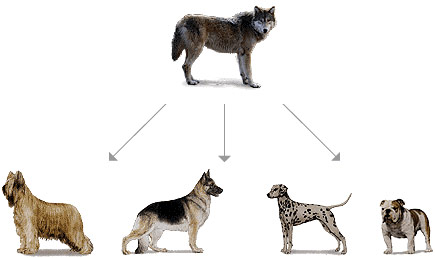
 Directional selection is a mode of natural selection in a phenotype that is single and favored. Making the allele frequency continuously move in one direction. Stabilizing selection also know as ambidirectional selection a type of natural selection where genetic diversity is decreased because the population slowly stabilized on a particular trait value. Another name for disruptive selection is diversifying selection, this is because it describes the changes in the populations genetics where extreme values for a trait are favored over intermediate values. Unlike stabilizing selection, disruptive selection the varity of the trait is increased and the population divides into tow distinct groups. To make the distinction between the three types of selections, here is an example of stabilizing selection. The weight of a newborn human if too light lose heat rapidly and tend to get infectious diseases. It also works the other way around, if the baby is too heavy they endanger not only themselves but also their mothers when passing through the birth canal. To help stabilize the birth weights a small range of birth weights had been selected to assure the stabilization. A good example for directional selection is the breeding of the greyhound dog. Breeders had selected from a group of hounds that were the fastest and then from their offsprings they selected again the fasted hound. It soon became a dog who could run up to 64km. The fur color of rabbits is a good example for disruptive selection. This rabbit has a incomplete dominance between white and black, now if the rabbit was to live in a enviorment with black and white rocks then the rabbits that would survive would be the black and white furred rabbits. However the gray furred rabbits that stand out and are unable to blend into their enviorment would be likely eaten which is when disruptive selection comes in. To ensure the species survival the selection allows only black and white fur to be showed but not the gray since it would decrease the species rate of survival.

Blog #3 Microevolution

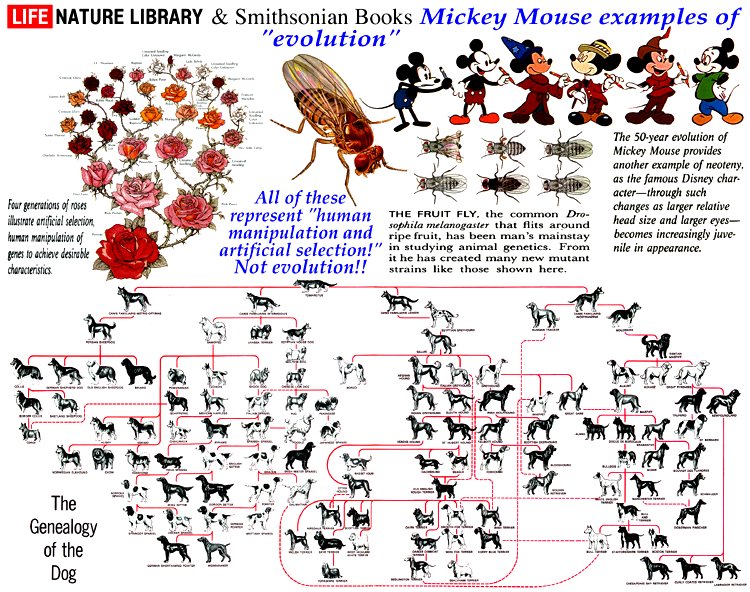
Microevolution is the change in the gene frequency within a population or species. Microevolution occurs in four different ways. The first way is mutation, next is natural selection or artificial selection. In addition another process is gene flow and a genetic  drift. Microevolution is the result from small specific genetic changes that can lead to a new subspecies. Microevolution occurs usually when there is a environmental change. It occurs so that a species has some differences or sometimes creating a new species. This is because the environment is changing so the species need to adapt along with the changing climate. In the movie the Future is Wild the modern day animals evolve into a different animal completely so that they can survive in the changed climate and environment.   answers.yahoo.com/question/index?qid=20090920160125AA1tK3Uhttp://en.wikipedia.org/wiki/Genetic_variation
http://en.wikipedia.org/wiki/Microevolution

Thursday, February 17, 2011

Blog #2 Fossil Records


Fossil records tend to hard to interpret because they are vague. A fossil can only form if the organism or animal had a skeletal body. If the organism doesnt have a skeletal body then there wouldn't be a fossil since the parts that form a fossil are usually the bones or hard and solid parts of the body that dont decompose over time. Also many things that happen in nature can damage the fossil making the record incomplete, and though it still gives us some information about the creatures that existed on earth long before us sometimes it is useless.  This makes fossil records are hard to explain because so many of the other fossils are lost or have been erased from the face of the earth by erosion and even becoming the sediments. Not only that fossil dont give us that much information about the organism. Fossils give us information about what the organism may of looked like as in shape and size but how about what color their skin or fur looked like? Fossils have no way of telling us about that. In addition there is also that problem of whether the fossil is real or not. Whether the fossil has reached all the requirements of being a fossil, like being old enough.
                                                         http://en.wikipedia.org/wiki/Fossil
http://answers.yahoo.com/question/index?qid=20080312052712AASeKXV
http://hoopermuseum.earthsci.carleton.ca/evolution/g.html

Thursday, February 3, 2011

Blog # 1 Theory

The main reason Evolution isn't a law is because it cannot be repeated and get the real results. Evolution is the change over time. In this case evolution changes an orgainism such as a finch. The finche's beakes changed over a time period so that it could survive more easily in the changed enviorment. Evolution happens to orgainism and animals because of an enviormental change like a decrease in food or maybe an earthquake. Mostly its because the normal cycle for an animal or orgainism had changed so it has to adapt or die out. This process is called natural selection-change so that a species wouldnt die out. Another
reason evolution isn't a law because it hasn't been observed and still hasn't been able to be proved.                                                                       http://en.wikipedia.org/wiki/Evolution
http://www.darwins-theory-of-evolution.com/

Friday, January 21, 2011

Semester Ending


My favorite activity this semester was the kimchi lab, i liked this lab because it was really interesting and kind of like cooking. Even though it really smelled i was pretty interested because i have been dying to try some Korean food. Another thing is that i have always been curious about fermentation. It was really fun mixing all the ingredients and it seemed like home ed class.  My least favorite activity was the karaoke project, i really don't like standing in front of the class and singing because i know my voice is horrible. Moreover my lyrics sounded really weird and confusing.Not only that my group practiced a lot but we hadn't thought of practicing together so we weren't singing in sync. The thing that i would change about this semester if i could re-do it would be reading the textbook. Throughout most of the semester i hadn't really had a chance to sit down and actually read the book and try to understand it. Another thing is i would want to change is the quizzes, if i had taken the time to really read the book then maybe most of my quiz scores would be better. In addition,(i know its more than one, so many regrets) i would like to re-do the karaoke project, improving the text and maybe singing louder (>////<) .
http://www.eagleswings1959.blogspot.com/

Thursday, January 6, 2011

Blog 13 Crimes vs DNA (:O)

 
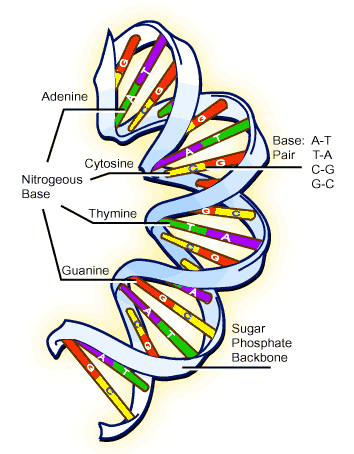
 DNA has changed the way we investigate crimes, it has made it easier to find the culprit and solve hard cases about the cause of death or murder. Now detectives can take DNA from a suspect killer and DNA from the victim or from the person murdered. From there the detectives can test the DNA on the suspect and the DNA on the victim to see if they match. If the DNA matches then the case moves up another notch and the police is one step closer to catching the person who committed the crime. For example, if a person was murdered the detectives would try to collect as much DNA samples that could be found on the person. A piece of hair or even a piece of skin could lead to the killer, if the victim had put up a fight and scratched the murder before dying then the detectives would be able to take the skin samples from under the nails and extract the DNA from the skin sample and use it to match it with a possible suspect. DNA can be left anywhere like fingerprints, in another case a handgun was left so the police and detectives were able to collect the DNA left on the handgun and matched it to the one in the database and soon they found a match and led to the arrest. If it was an angry killer, detectives might even be able to find DNA in the victims eyes, because there might be saliva inside or on the face where some of the spit may have landed. They could easily find if the spit is of the victim or of another person by comparing it to the saliva from the victims mouth. The two main DNA test are called RFLP and PCR. Before DNA was discovered it was hard for detectives to catch a criminal because the only way was to find evidence from a set up or catching the curpit repeating the crime. Now thanks to DNA detectives have a slightly  easier job. RFLP is a sequence of DNA that ends with a target and a sequence between, PCR is a DNA amplifier.

Monday, December 27, 2010

Blog 12 Mendel's Pea Plant Experiment


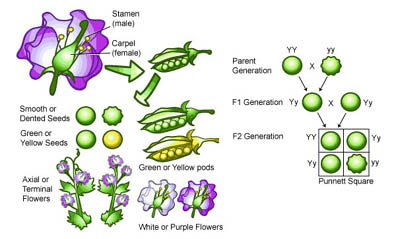
In one experiment about Pea plants were Mendel cross-pollinated smooth yellow pea plants with the wrinkly green pea plant. The first generation pea crop or f1 was yellow and round as its yellow and round parent. During the cross-pollination the yellow pea parent somehow dominated the green pea plant thus the yellow pea children. This experiment resulted to Mendel discovering the two types of traits-dominant and recessive. For this experiment the dominant trait was yellow and round because they had been the result in the children pea plant. The inheritance of each trait is determined by units or factors now later called as genes. When Mendel tried the experiment again, this time using the result of the parent generation- all yellow and all round and pollinating it with a self pollinated grown up plant(f2). However this time the result was of yellow and green pea crops. Biological inheritance is determined by factors that are passed from one generation to the next.The principle of dominance states that some alleles are dominant and others are recessive. Organisms with dominant allele for a particular form of a trait will always exhibit that form of the trait.